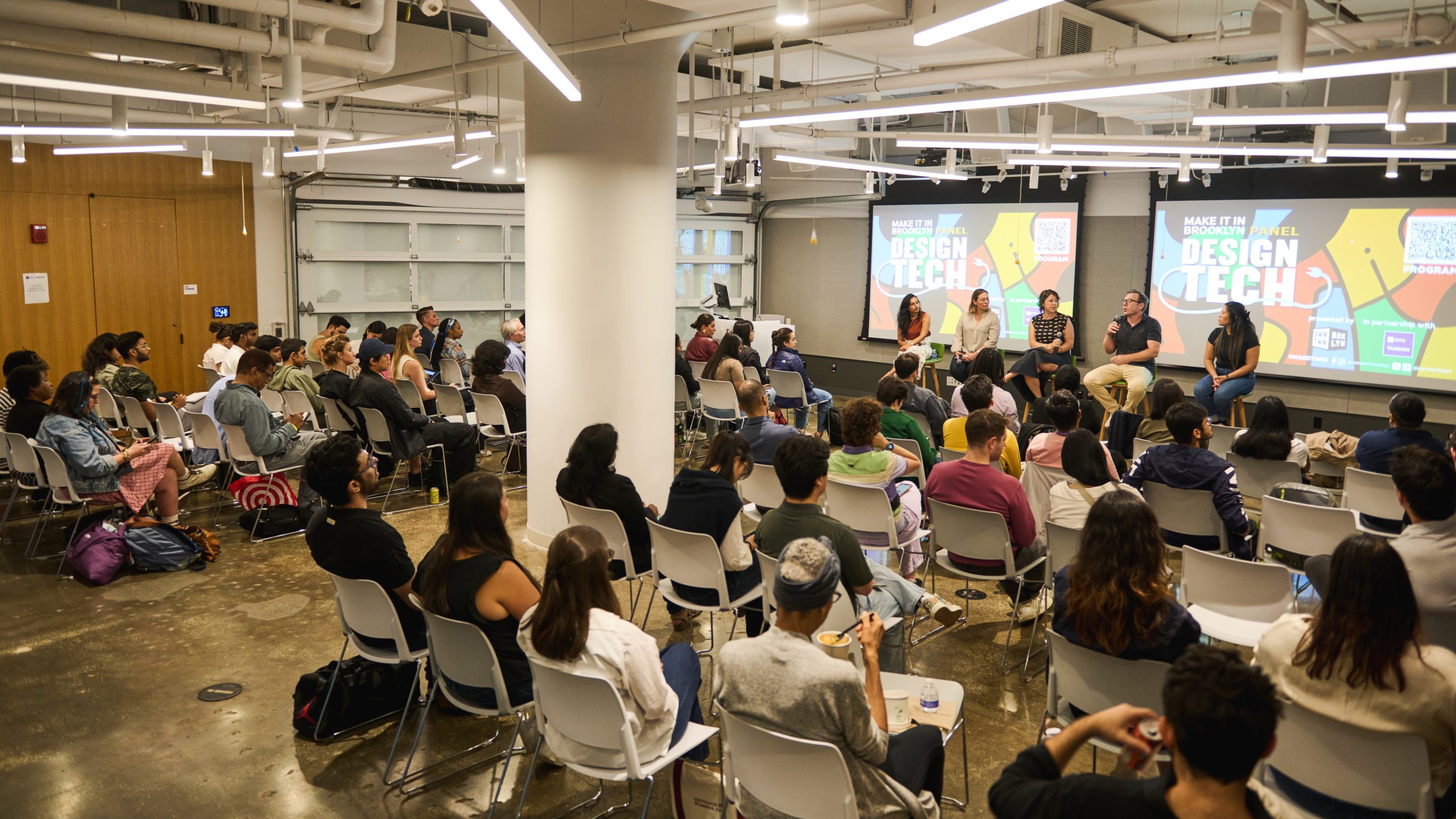
This week, in partnership with NYU Tandon School of Engineering, Downtown Brooklyn Partnership brought together a dynamic panel of design and technology leaders to explore the intersection of innovation, manufacturing, and human-centered design. The conversation highlighted Brooklyn’s position as a creative hub where diverse industries and perspectives converge to shape the future of product development.
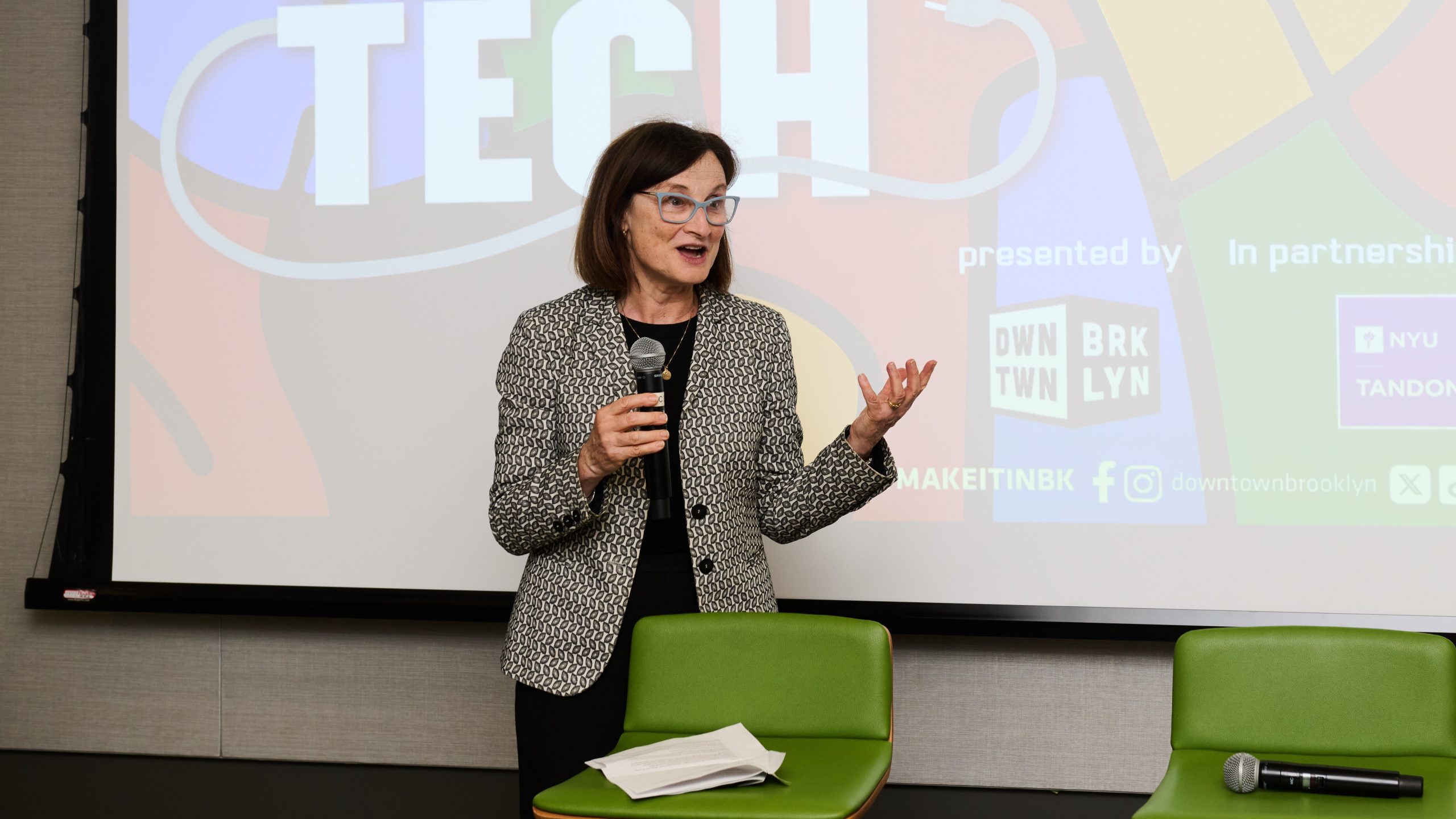
DBP President Regina Myer introduces the panel with warm opening remarks.
The panel included Mark Prommel, partner and design lead at Pensa; Christina Perla, co-founder and CEO of Makelab, a 3D printing solutions company serving consumer, robotics, and medical brands; Bertha Jimenez, Industry Assistant Professor at NYU Tandon’s Technology Management Department, and co-founder of RISE (repurposing beer by-products into healthy flour); and Dishita Turakhia, NYU Tandon Computer Science Engineering faculty member specializing in human-computer interaction and designing systems for learning physical skills through AR/VR and AI. The panel was moderated by Shelby Thompson, Director of Deployment at Voltpost.
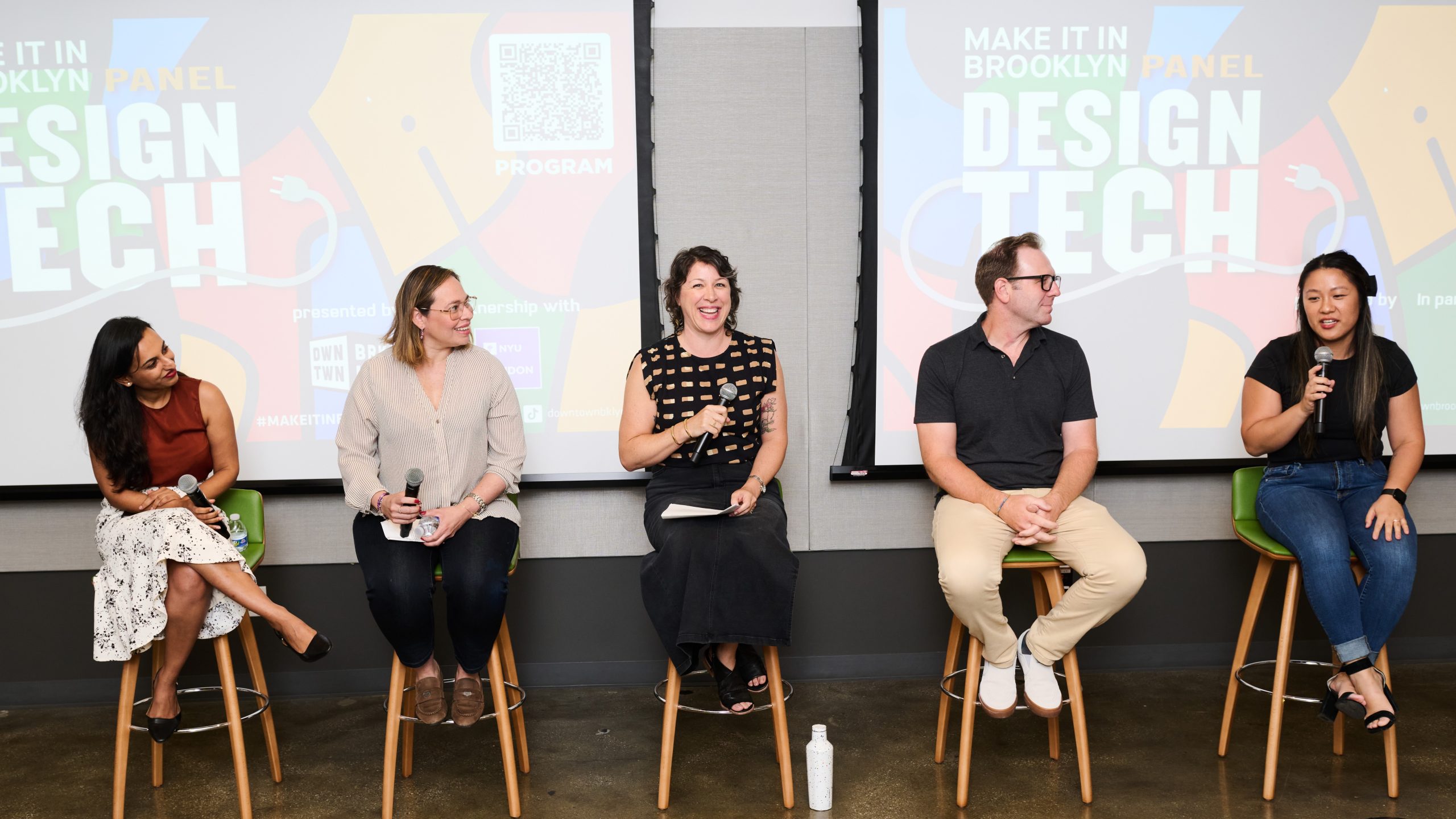
Dishita Turakhia, Bertha Jimenez, Shelby Thompson, Mark Prommel, Christina Perla
Key Themes and Insights
Design-first innovation meets commerciAl reality
Mark described the challenge of balancing innovative design with commercial viability through the story of Nanit, a connected baby monitor. Nanit features groundbreaking computer vision technology that can analyze infant sleep patterns to millimeter precision, but it must be suspended directly over a crib at a specific height.
The challenge was to use this technical requirement to design something that felt beautiful and safe in a modern nursery, not like “a security camera over my child’s crib.” The solution became an elegant lighting fixture that provided ambient illumination while housing sophisticated monitoring technology — turning a constraint into a compelling product feature.
Human-centered design in an AI-driven world
Dishita emphasized the importance of keeping humans at the center of technological solutions, drawing from philosopher Marshall McLuhan’s insight: “First we shape our tools and thereafter they shape us.” This philosophy guides her research and teaching approach; pushing students to consider not only immediate functionality but long-term societal impact.
“We need to think about where we’re heading culturally as a society,” she explained, advocating for ethical design frameworks and hard guardrails built into products from the start, since policy and law often lag behind technological innovation.
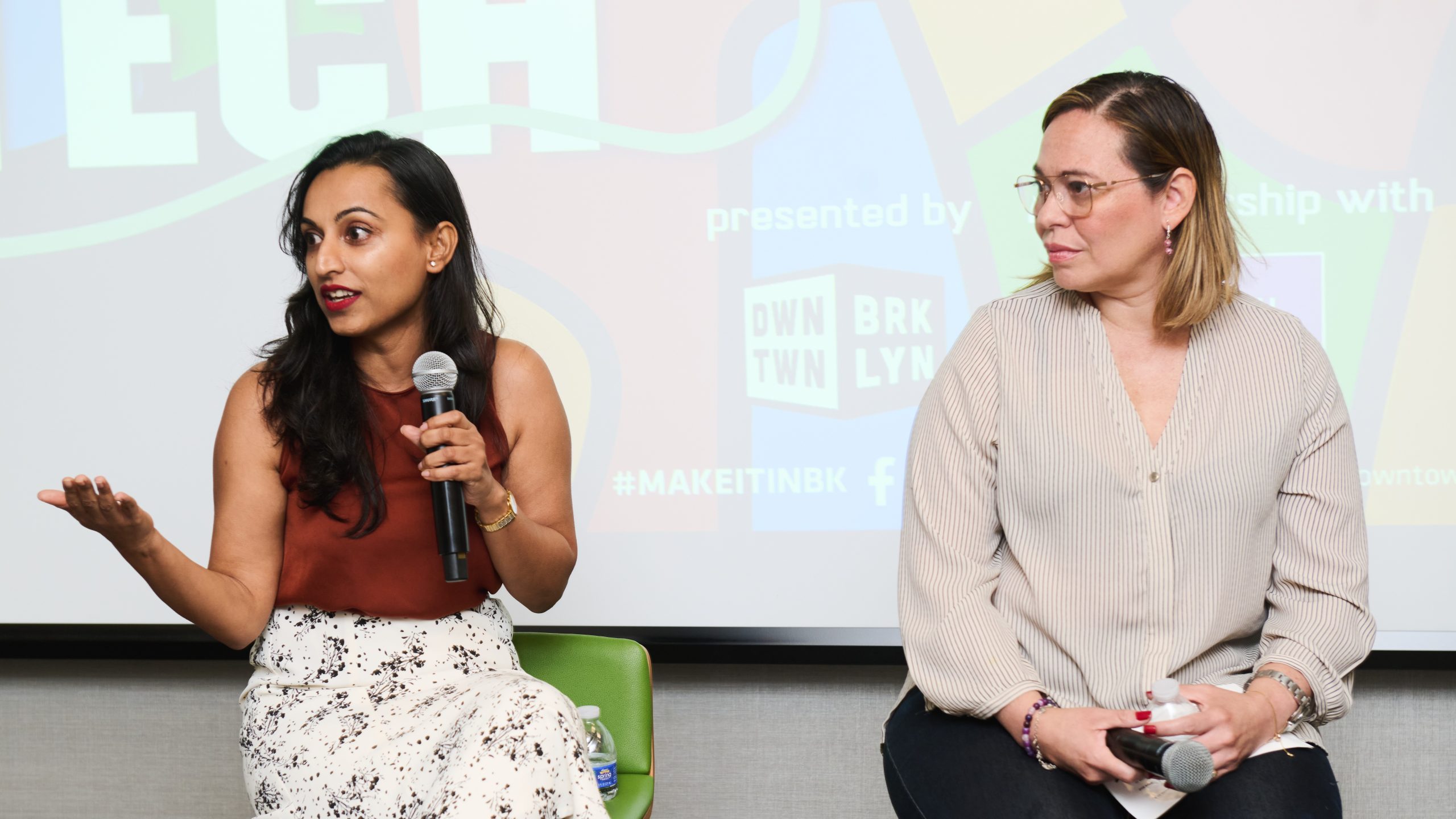
Dishita emphasized the importance of keeping humans at the center of technological solutions.
The reality of making: from prototype to production
Christina brought a refreshingly honest perspective on the manufacturing process, particularly in 3D printing. At Makelab, they embrace challenging projects—like an eight-day print for a stool that must hold 190 pounds with no external hardware. “We welcome this. This is what we open our doors to,” she said, describing how pushing boundaries is essential for a service-based manufacturing business.
The panel discussed the significant sustainability challenges in 3D printing, from material waste to the lack of standardization that makes recycling difficult. Christina noted that while many companies ask about sustainable practices, the infrastructure challenges—from material separation to processing equipment—make it a complex industry-wide problem rather than something individual businesses can easily solve.
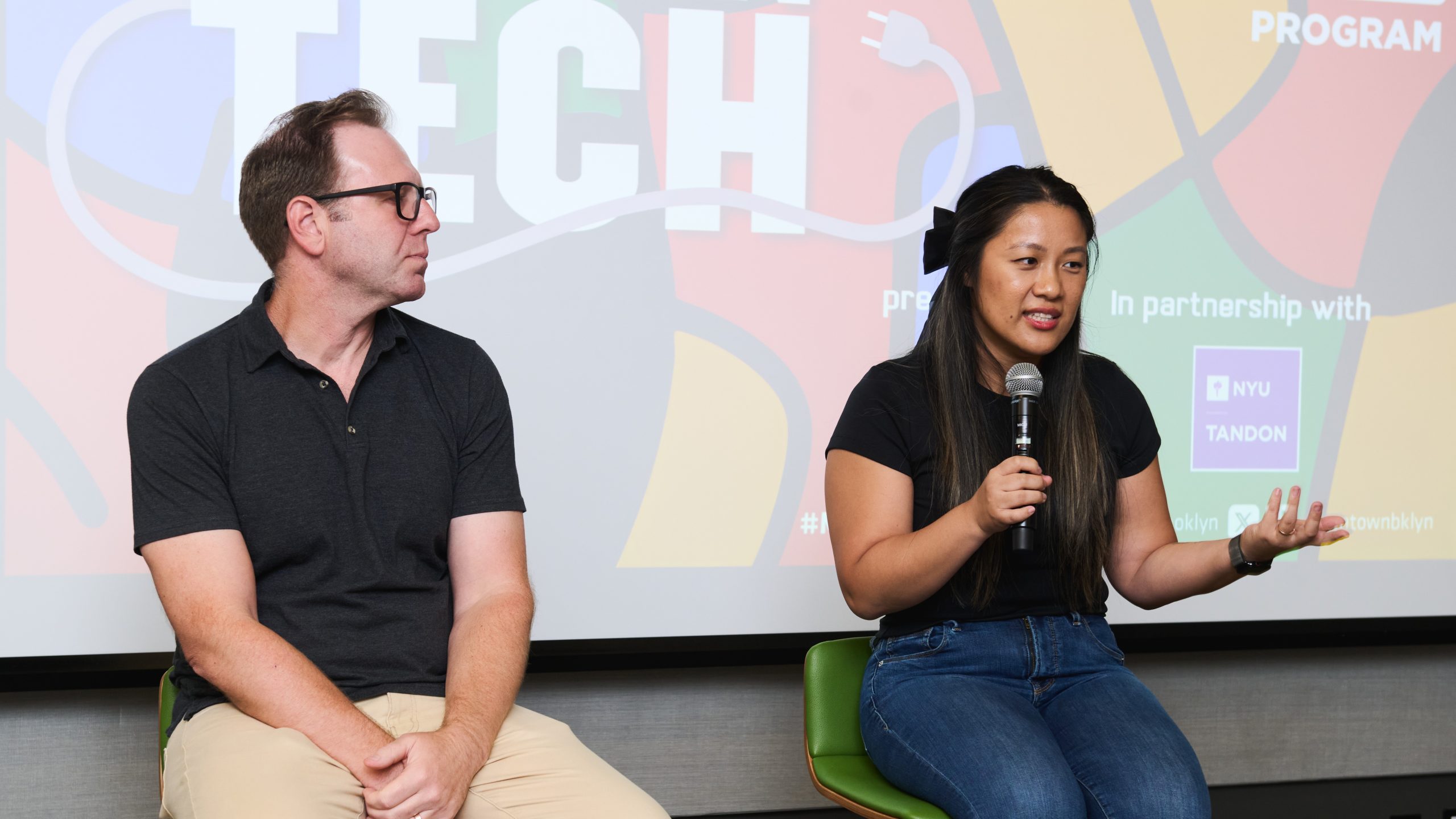
Christina highlighted how confidence and storytelling ability is required to present new ideas effectively.
The Skills Gap and Future Workforce
When asked about skill requirements for emerging designers and technologists, the panelists emphasized several key areas: Technical competency paired with human empathy: Students need both technological skills and the ability to identify problems where technology is the right solution, keeping users at the center of the design process.
- Problem-finding over solution-making: Bertha stressed the importance of understanding user needs deeply before jumping to solutions: “Don’t go and make things. The first step is really understanding the problem.”
- Communication and confidence: Christina highlighted a common challenge among new graduates—having good ideas but lacking the confidence or storytelling ability to present them effectively. “No one’s going to listen to your idea if you’re not passionate about it.”
- Specialized depth with broad thinking: Mark advocated for “T-shaped” professionals who combine broad critical thinking with deep specialization in a specific area, whether design research, industrial design, or technical engineering.
Manufacturing’s return to New York
The discussion touched on the potential for bringing manufacturing back to New York City. Christina pointed out that 3D printing enables local production at scale—Makelab prints tens of thousands of parts right in Brooklyn. The panelists saw opportunities in smaller-scale, specialized manufacturing that leverages the city’s diverse skill base and creative community.
However, they acknowledged challenges including the need for skilled labor and the cultural perception of manual work. As Christina noted, there’s a disconnect between the reality that manual assembly will always be part of manufacturing and society’s tendency to view such work as less desirable.
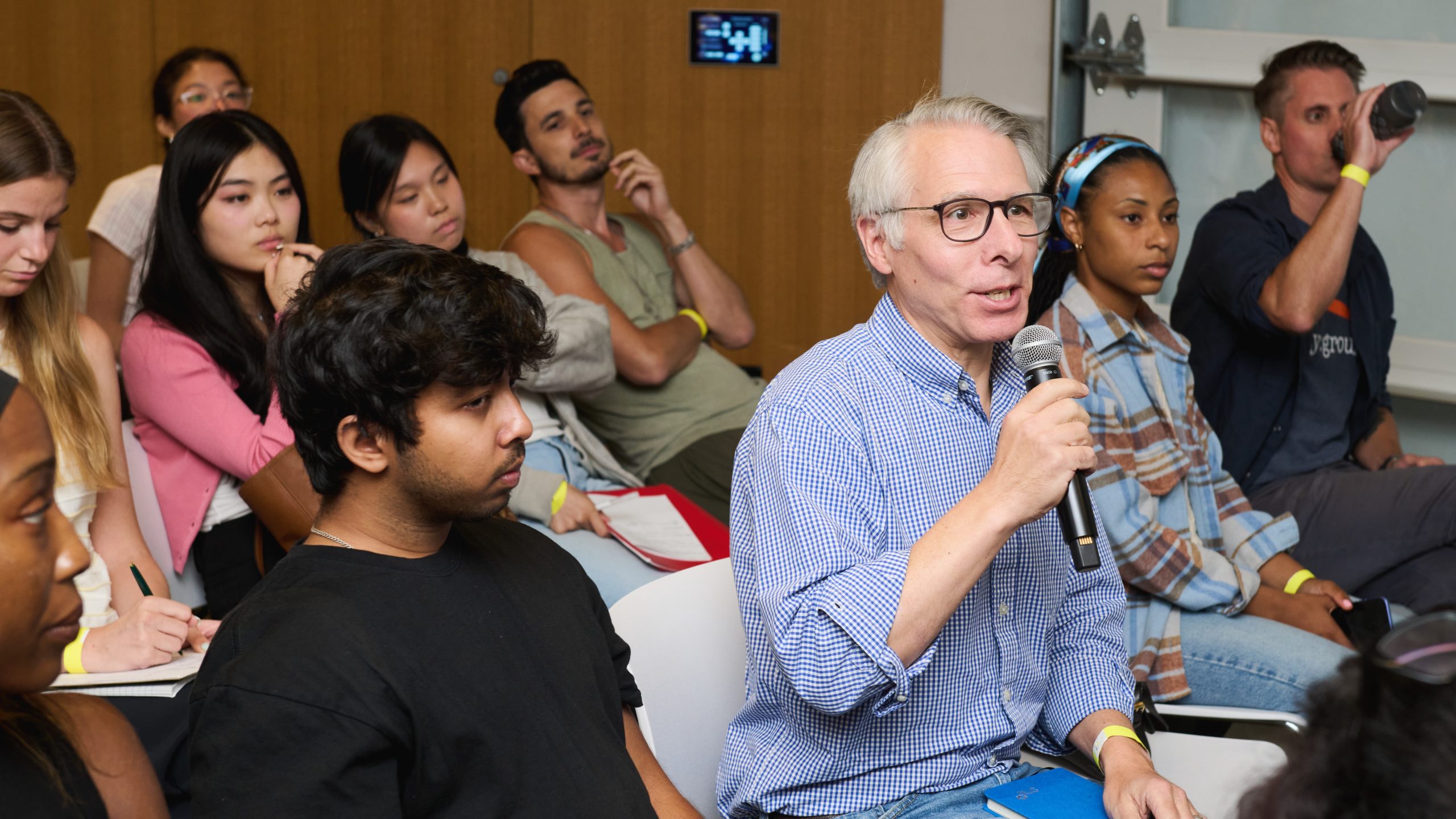 The panel wrapped with a Q&A, giving the audience the opportunity to join the conversation.
Brooklyn’s creative advantage
The panel concluded with reflections on what makes Brooklyn unique for innovation. Mark highlighted the city’s “broad set of influences and history of different skills and crafts”—from fashion and textiles to art, music, and technology—creating a rich tapestry that influences product development in ways not found on the West Coast.
Christina, who has spent time in San Francisco, contrasted the cultures: “There’s such a unique opportunity in being a professional in Brooklyn and New York. You have access to everything. You have people that are so open to meeting you… There’s an abundance of curiosity here.”
The diversity of industries prevents any single sector from dominating, creating space for cross-pollination of ideas and approaches that strengthens the entire ecosystem.
Resources and Next Steps
The panelists shared several resources for professional growth:
- Human-Computer Interactions Seminars organized by Dishita at NYU Tandon, featuring cutting-edge researchers and designers
- New York Hardware Meetups for networking and learning in the hardware community
- Makelab’s office hours for early-stage hardware companies
- Cold emailing and mentorship as powerful tools for career development
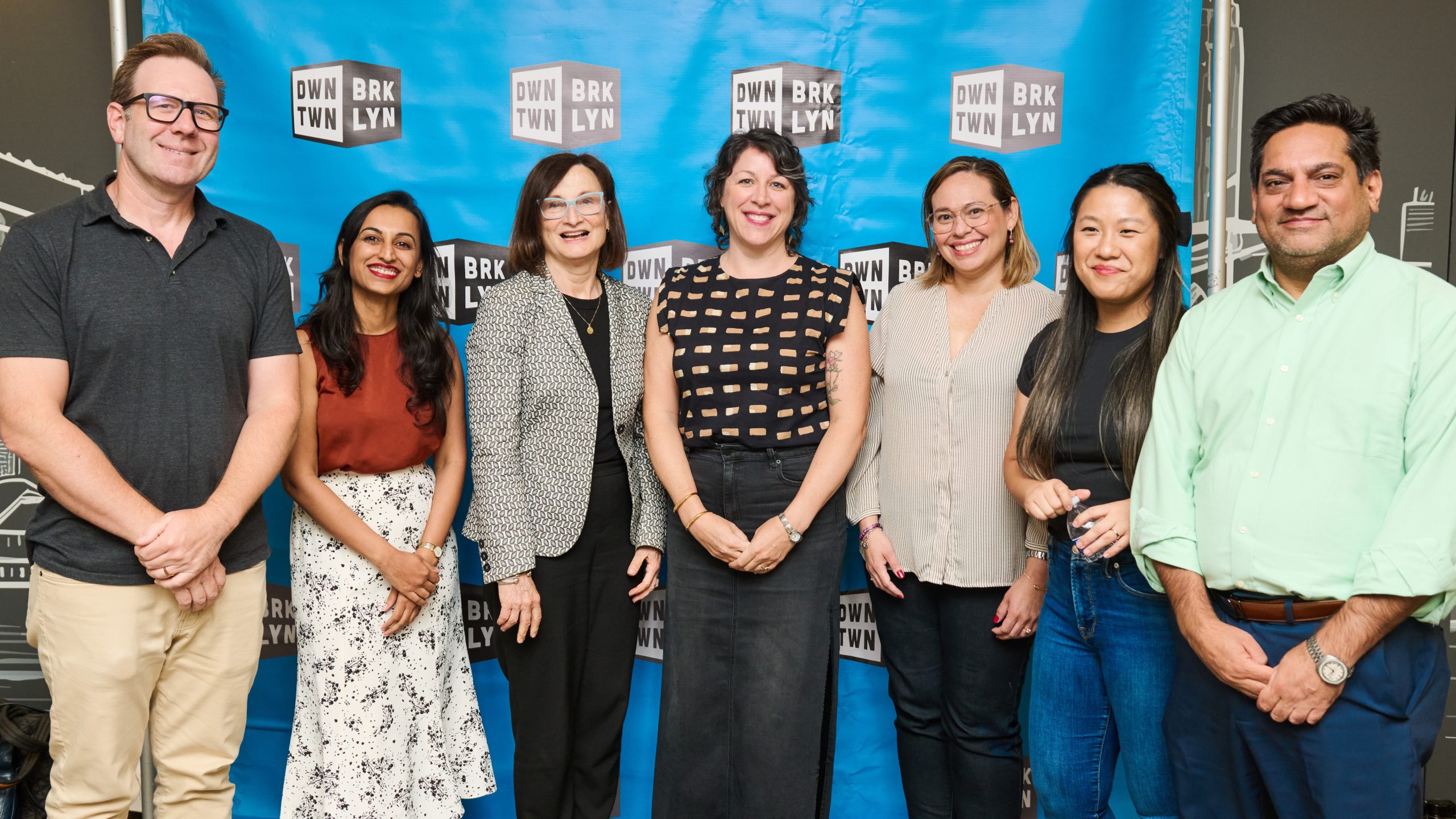
Our panel takes a photo with DBP President Regina Myer and NYU Tandon Vice Dean of External Relations & Public Affairs Sayar Lonial
Looking forward
The panel painted a picture of Brooklyn as a place where technical innovation meets human-centered design, where diverse perspectives converge to solve real problems, and where the next generation of designers and technologists can find both inspiration and practical support for their ideas.
The conversation emphasized that successful innovation requires not just technical skills but empathy, ethical thinking, and the ability to communicate compelling visions that keep human needs at the center of technological progress.